
Live Like a Local in Asia: Insider Tips Beyond the Guidebook
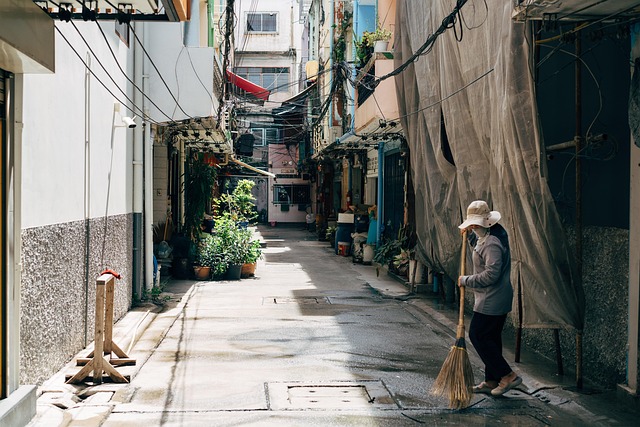
You've saved up for months. You've got your flights booked, your hotels reserved, and a Pinterest board overflowing with Instagram-worthy temples. But here's the thing: the best travel experiences in Asia aren't waiting in guidebooks or trending hashtags. They're happening in the neighborhoods tourists never visit, in the restaurants where the menus have no English, and in the small moments of genuine connection that make you feel like you actually belong somewhere, even if it's just for a week.
I've spent years bouncing between Asia's biggest cities and hidden corners, and I've learned that living like a local isn't about pretending to be something you're not. It's about being genuinely curious, showing respect, and making small choices that add up to a fundamentally different travel experience. Let me share what actually works.
Skip the Guidebook Restaurants (and Eat Where You're Confused)
The restaurants packed with tourists aren't bad because the food is bad—they're bad because they're boring, overpriced, and you'll never have the kind of meals that stay with you for years. I learned this the hard way in Bangkok, walking past a nondescript shophouse with plastic stools and a menu I couldn't read. I ordered by pointing at what other customers were eating. That $2 bowl of khao soi was somehow more memorable than the fancy rooftop dinner I'd planned weeks before.
The real move? Walk into neighborhoods at lunch or dinner time and look for restaurants full of local people, preferably families. If the staff seems confused by your presence, you're on the right track. Use Google Translate on your phone camera to read menus, point enthusiastically at other people's plates, and embrace the uncertainty. Yes, you might end up with something unexpected. That's the entire point.
One practical tip: download offline maps and Google Translate before you go. In Vietnam, Thailand, and Indonesia especially, you'll encounter countless places with zero English signage. Being able to translate a menu photo or get directions without relying on WiFi changes everything.
Learn Three Phrases in the Local Language
I'm not suggesting you become fluent. I'm suggesting you say "hello," "thank you," and "delicious" in the local language. That's it. Watch what happens.
When I started ordering my morning coffee in Vietnamese instead of English, something shifted. Shopkeepers smiled differently. Vendors started giving me bigger portions. People actually talked to me instead of just transacting with me. It's not magical—it's just basic human respect, and it costs nothing.
The languages are harder than they look online. Thai has five tones. Vietnamese has six. But "Sawadee krap" (hello in Thai) and "Xin cảm ơn" (thank you in Vietnamese) are learnable in five minutes. Google Translate's audio feature is your friend here. Spend one evening before your trip learning these phrases, and you'll be shocked at how differently locals respond.
Stay in Neighborhoods, Not Tourist Districts
I'm going to say something controversial: you probably don't need to stay in the exact city center. In fact, you probably shouldn't.
When I booked a place in a residential neighborhood in Chiang Mai instead of the Old City, I had no idea what I was missing. My street had actual residents—families, grandmothers, kids playing. There was a 7-Eleven, a local market, a massage shop where the owner recognized me by day three. It cost less, felt safer, and I woke up to real life instead of the manufactured experience of a tourist zone.
You don't need to be in the action 24/7. You need to be somewhere real. Use Google Maps to explore neighborhoods a few blocks beyond the obvious tourist clusters. Check reviews on Airbnb or Booking.com, but pay special attention to recent reviews from people who stayed for multiple weeks—they'll tell you which neighborhoods actually have daily life happening.
Use this strategy: find a neighborhood with local restaurants, a market, and actual residential buildings. Stay there. Spend your days exploring other areas if you want, but come home to reality.
Move Slowly Through One Place
Here's what separates travelers from tourists: speed. Most people try to do too much. Bangkok, then Phuket, then Chiang Mai, then Hanoi—all in two weeks.
I'm not saying skip places. I'm saying stay longer in fewer places. Five days in one city beats two days in five cities. When you stay somewhere for a week, you develop routines. You discover the coffee shop locals actually drink at, not the one with the aesthetic vibe. You get to know people. You stop being a novelty.
The irony is that slowing down actually lets you see more, because you're not constantly in transition mode. You have time to wander, get lost, and stumble into the real magic.
The Honest Truth
Living like a local as a visitor will always be a performance to some degree. You're not living there. You're not paying taxes or dealing with the bureaucracy or the real complications. But that doesn't mean your experience has to be shallow or disconnected. Show genuine interest. Respect local customs. Eat the weird things. Learn the basics of the language. Stay put. And you'll have a travel experience that actually changes you, rather than just filling your Instagram feed.
Start with just one of these ideas on your next Asia trip. Pick the one that feels most doable, and see what happens.